Best Linkwarden alternatives (2026)
Linkwarden is an open-source, self-hostable bookmark manager focused on preservation and collaboration. Every saved link is automatically archived as a screenshot, a PDF, and a readable text copy — and can be pushed to the Wayback Machine — so bookmarks keep working even after the original page changes or disappears. Links are organized into nested collections with tags, optional AI-generated tags (including via local models for privacy), highlights and annotations, and full-text search across archived content. Collections can be shared publicly or edited collaboratively with per-user permissions. The project is AGPL-3.0 licensed with all features available when self-hosting for free; the official Cloud service costs $3/month per user billed yearly (or $4 billed monthly) after a 14-day trial and supports up to 30,000 links per user. Browser extensions cover Chrome, Firefox, and Edge, a REST API enables integrations, and official iOS and Android apps arrived in late 2025 with share-sheet saving and offline caching. Below are the strongest alternatives in 2026, ranked honestly: each covers a different mix of jobs, and the right one depends on yours.
Why users leave and switch from Linkwarden
While Linkwarden has loyal users, power bookmarkers frequently switch due to common limitations:
Folder fatigue & filing friction
Manual categorization into collections becomes unsustainable as your library grows into thousands of saves.
Keyword search limits
When you forget the exact title or tags, keyword search comes up empty. AI semantic search finds bookmarks by meaning.
Missing AI workflows
No automatic summaries, no YouTube transcript indexing, and no conversational chat across your library.
The best Linkwarden alternatives, ranked
- #1
Marqly
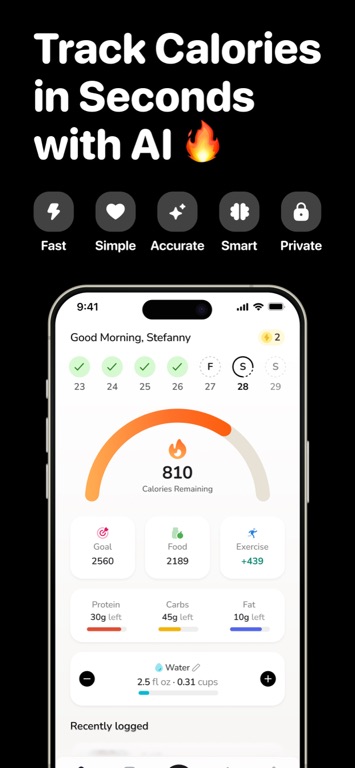
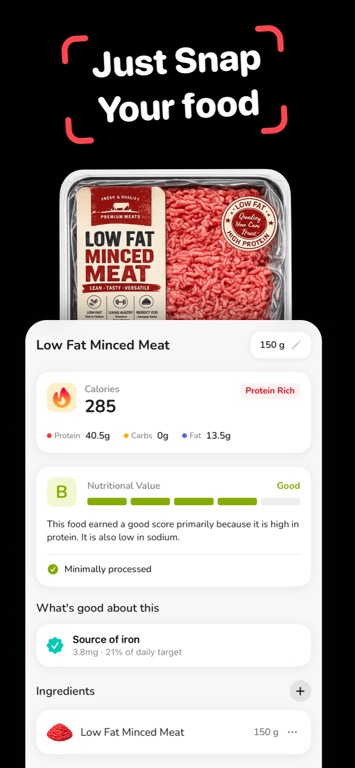
The AI bookmark manager — save once, find it instantlyMarqly covers the core job — save, organize, retrieve — and adds semantic search (find by meaning), AI summaries, YouTube AI (summary, chat, transcript) that Linkwarden doesn't offer. Every save is auto-tagged and summarized, and semantic search finds things by meaning. Free tier, no card required.
- Semantic search finds saves by meaning — describe what you remember, no exact titles needed
- AI tags and summarizes every save automatically, so nothing needs manual filing
- YouTube AI card puts summaries, transcript, and Q&A right on the watch page
Pricing: Marqly has a free tier; paid plans are $72/year (≈$6/mo) or $9/month. 7-day free trial of Pro. Free tier needs no card and stores up to 2,000 bookmarks with search across your whole library; every AI feature is Pro — auto-tagging, summaries, semantic search, AI Q&A over saves and video chat.
- #2
Raindrop.io
The all-in-one bookmark managerThe best traditional bookmark filing cabinet — organization is world-class, but finding things still depends on your own tags and keywords. Collectors and visual organizers who file thousands of bookmarks into structured collections and want polished apps everywhere without paying.
- One of the most generous free plans anywhere: unlimited bookmarks, collections, and up to 3 highlights per bookmark
- Polished apps on every platform — web, Mac, Windows, Linux, iOS, Android, and all major browser extensions
- Strong visual organization with covers, nested collections, and multiple view modes
Pricing: Raindrop.io has a free tier; paid plans are $28/year or $3.25/month (Pro; App Store pricing $27.99/year, $2.99/month). The free plan offers unlimited bookmarks, collections, and devices, with up to 3 highlights per bookmark and 100 MB/month uploads. Pro adds full-text search, Stella AI save-time tag and collection suggestions, permanent page copies, reminders, annotations (unlimited highlights in 4 colors with notes), and daily backups. Yearly billing is about 20% cheaper than monthly.
Marqly vs Raindrop.io → - #3
Karakeep
The open-source, self-hosted bookmark-everything app with AI taggingThe best open-source bookmark manager if you're comfortable running Docker — free forever, with real AI features. Self-hosters and privacy-focused tinkerers who want AI tagging, summaries, and full-text search on their own hardware without a subscription.
- Free, open source, and self-hosted — your bookmarks live on your own server
- AI auto-tagging and summaries via any OpenAI-compatible API or fully local Ollama
- Meilisearch full-text search, with semantic and hybrid modes added in 2026
Pricing: Karakeep has a free tier; paid plans are Self-hosted: free. Karakeep Cloud Pro: $4/month. The self-hosted app is fully free and open source; AI features need your own OpenAI-compatible API key or a local Ollama model. Karakeep Cloud (public beta) has a $0 tier capped at 10 bookmarks and a Pro tier at $4/month — the exact annual price is not published.
Marqly vs Karakeep → - #4
Anybox
Native, privacy-first bookmark manager for Mac, iPhone, and iPadThe best native bookmark manager on Apple platforms, as long as you organize by hand and never need it outside the Apple ecosystem. All-in Apple users who want a fast, private, native bookmark app with archiving — and don't need AI, collaboration, or cross-platform access.
- Fast, genuinely native Apple app — 4.7 stars on the App Store, praised for speed and reliable iCloud sync
- Deep macOS integration: Spotlight, widgets, Siri Shortcuts, AppleScript, plus Raycast, Alfred, and PopClip companions
- Archives any bookmark as PDF, web archive, or screenshot — automatically or on demand — for offline access
Pricing: Anybox has a free tier; paid plans are $14.99/year, $1.99/month, or $39.99 lifetime. Free tier caps at 50 saved links and 12 Anydock slots; no time-limited trial, the free tier serves that role. One universal purchase covers Mac, iPhone, iPad, and Vision Pro.
Marqly vs Anybox → - #5
Diigo
Bookmark, highlight, and annotate the web for researchStill a capable research annotator for the price, but the product is coasting — choose it for what it does today, not where it is going. Students, teachers, and researchers who need to highlight and annotate web pages collaboratively on a small budget.
- Multi-color highlighting and sticky notes directly on live web pages — still its core strength
- Groups enable shared libraries and collaborative annotation, popular in education
- Free Teacher plan with a class console for verified educators
Pricing: Diigo has a free tier; paid plans are Standard $40/year; Professional $59/year; Business $10/user/month. The free plan is ad-supported and caps lifetime bookmarks and highlights — Diigo's own pages state the limit inconsistently (500–1,000 bookmarks, 100–200 highlights). Cached pages, PDF annotation, and full-text search are paid features. A free Teacher plan exists for verified educators.
Marqly vs Diigo → - #6
Pinboard
Social bookmarking for introverts — fast, minimalist, paidStill the most dependable minimalist bookmarking service money can buy — if you can live without AI, apps, and a modern interface. Text-oriented power users who want fast, durable, no-frills bookmarking with an API, and who value longevity over modern features.
- Seventeen years of uninterrupted service — one of the web's oldest independent subscription products
- Archival accounts store a full copy of every bookmarked page and flag dead links, defeating link rot
- Famously solid, well-documented API with a rich ecosystem of third-party apps
Pricing: Pinboard costs $22/year, or $39/year with archiving and full-text search. No free tier — Pinboard has been paid-only since 2009, which is how it has outlived its free competitors. The $39/year archival account stores a full copy of every page you bookmark and unlocks full-text search across those copies. Multi-year discounts available.
Marqly vs Pinboard →
Marqly vs Linkwarden, feature by feature
| Feature | Marqly | Linkwarden |
|---|---|---|
| AI auto-tagging | ✓ | ✓ |
| Semantic search (find by meaning) | ✓ | — |
| AI summaries | ✓ | — |
| YouTube AI (summary, chat, transcript) | ✓ | — |
| AI Q&A over your saves | ✓ | — |
| Web highlighter | ✓ | ✓ |
| Notes on highlights | ✓ | ✓ |
| Save page as PDF | ✓ | ✓ |
| Full-text search | ✓ | ✓ |
| Save all open tabs | ✓ | — |
| Public sharing (boards/collections) | ✓ | ✓ |
| Pocket import | ✓ | ✓ |
| Browser bookmarks import | ✓ | ✓ |
| Offline reading | — | ✓ |
| iOS app | ✓ | ✓ |
| Android app | ✓ | ✓ |
| Browser extension | ✓ | ✓ |
| Free tier | ✓ | ✓ |
| Public API | — | ✓ |
| Self-hostable | — | ✓ |
| Price | Free · $72/year (≈$6/mo) or $9/month | Free · Cloud: $3/month per user billed yearly (25% off) or $4/month billed monthly |
- Marqly
- Free · $72/year (≈$6/mo) or $9/month
- Linkwarden
- Free · Cloud: $3/month per user billed yearly (25% off) or $4/month billed monthly
See the full Marqly vs Linkwarden comparison → · 2026 Bookmark Manager Index → · How to migrate to Marqly with zero data loss →
Linkwarden alternatives FAQ
Is Linkwarden free?
Yes, if you self-host: Linkwarden is fully open source under AGPL-3.0, and a self-hosted instance includes every feature at no cost beyond your server. The managed Cloud service has no permanent free tier — it costs $3/month per user billed yearly ($4 billed monthly) after a 14-day free trial.
Is Linkwarden still being developed?
Yes, very actively. Linkwarden has grown into one of the most popular open-source bookmark managers, with a public GitHub repository (19k+ stars), frequent releases, and official iOS and Android apps launched in late 2025. Development is funded by the Cloud subscription, giving it a sustainable model that pure-donation projects often lack.
What is the best Linkwarden alternative?
Among self-hosted tools, Wallabag is the reading-focused counterpart and Karakeep (formerly Hoarder) adds AI-heavier organization. For hosted apps, Raindrop.io offers a generous free tier, and Marqly is a strong option if finding saves matters more than archiving them — it auto-tags with AI and supports semantic search by meaning, plus highlights and YouTube summaries, though it is not self-hostable.
Does Linkwarden work on iPhone?
Yes. Linkwarden shipped an official iOS app in late 2025 with collections, tags, search, share-sheet saving, and cached data for offline viewing; it works with both Linkwarden Cloud and self-hosted instances. The app is new and still gaining features, so the web app remains the most complete way to manage a large library.
Can I export my data from Linkwarden?
Yes. Linkwarden exports your links as standard bookmark HTML or JSON from settings, and archived page copies (screenshots and PDFs) can be downloaded. A documented REST API allows full programmatic export. If you self-host, everything already lives in your own database and file storage, so portability is total by design.